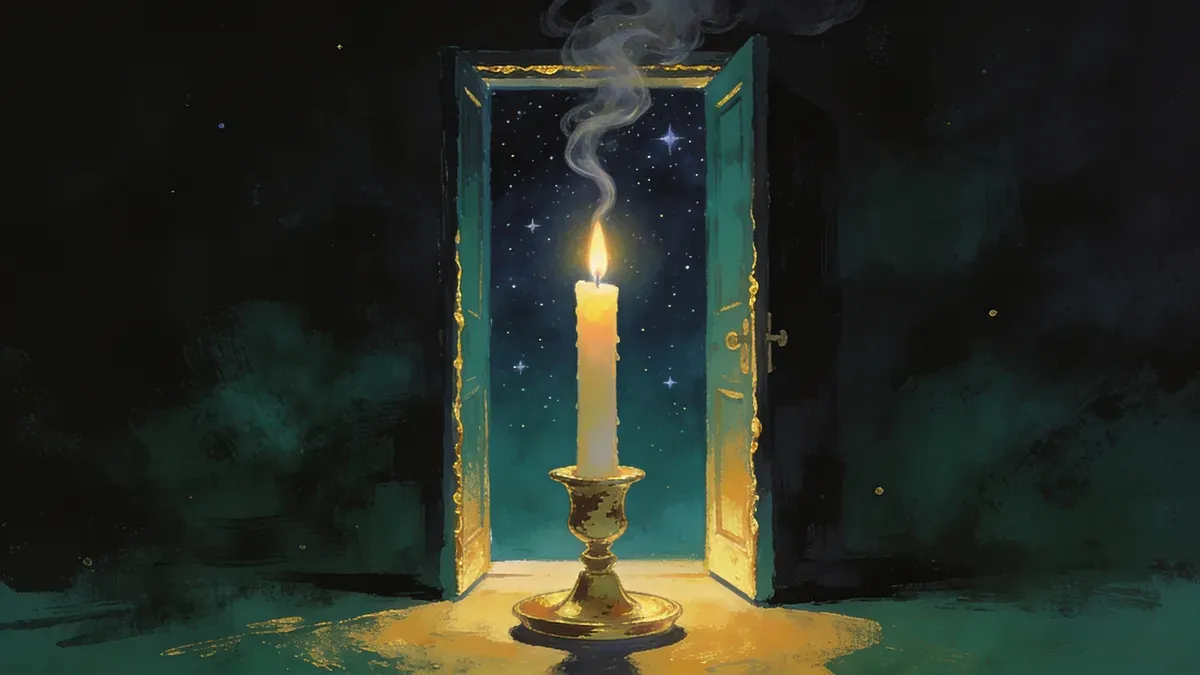
111 angel numbers read as a beginning signal — the moment before a door opens, not the reward after it. The tradition treats 1 as initiation, so tripled it points at thresholds: something is starting, and your attention is being asked to show up for it.
Which is a lovely sentence that doesn’t tell you what to do on Tuesday.
So let’s get specific: what the number carries, how it differs from the 1111 you’ve also been seeing, and what the first 48 hours after a sighting should actually look like.
What Do 111 Angel Numbers Actually Mean?
In numerology the 1 is the digit of self-direction. Initiative, identity, the first move. It’s the number of the person who goes first — for better and worse, since 1 also carries stubbornness and a tendency to go it alone.
Repeat it three times and you concentrate that quality. 111 reduces to 3 (1+1+1), which adds expression and creativity to the mix. So the reading lands somewhere near: start the thing, and let it be yours.
The 1 has a cost built into it, though. The digit that goes first is also the digit that goes alone, and a strong 1 season can tip into doing everything yourself because asking felt slower.
If that pattern is familiar, hold it alongside the beginning reading. Start the thing — but you don’t have to start it unaccompanied.
The short version: 111 marks a doorway, not a destination.
That’s the distinction that keeps people from misusing it. The number doesn’t say the new job is coming or the relationship will work. It says something is at a beginning, and beginnings ask for participation. For the quick lookup — core meaning, love, career, the numerology breakdown — our 111 reference page collects it in one place.
One honest note first: this is reflection and entertainment. Nothing here is advice about your health, your money, or a legal situation, and no number can tell you how a decision will turn out.
111 vs 1111 vs 11:11: Which One Are You Seeing?
This is where most articles go vague, so let me be blunt about it.
| What you saw | How it is usually read | Where people meet it | Practical difference |
|---|---|---|---|
| 111 | Begin — a threshold, a first step | Receipts, page numbers, addresses, prices | The everyday version; the one that asks for action |
| 1111 | Notice — alignment, a marked moment | Clocks, dates, order totals | Read as bigger or more significant; same core theme |
| 11:11 | The clock form of 1111 | Almost always a clock, twice a day | The most reported because everyone checks the time |
| 11 | A master number in its own right | Anywhere | Read as intuition and sensitivity, not initiation |
Here’s the part nobody says: the practical distinction between 111 and 1111 is thin. Different traditions split them differently, and plenty of experienced readers use them interchangeably. If a page gives you a confident, precise difference, it’s inventing the precision.
The 11 row deserves its own note. In numerology, 11 is a master number, which means it isn’t reduced down to 2 the way most double digits are. Readers treat it as heightened intuition and sensitivity rather than initiation — a different flavour entirely from the 111 it resembles.
Where you see the number matters less than people think, but it’s worth a line. Clocks get reported most, then receipts, addresses, page numbers, and prices — anywhere a three-digit string turns up often enough to be seen twice. None of those carry a separate meaning.
What genuinely changes the reading isn’t the digit count. It’s the context — where you were, what you’d been thinking about, what you did next. Two people seeing 11:11 in the same minute are reading two different things.
The 11:11 case has its own quirk worth naming. It appears twice a day, on a device you look at dozens of times, during the two minutes you’re most likely to be idle. High reporting rates don’t need much explaining.
If your sightings have been clustering around one specific situation — a decision you keep re-opening, a person you can’t get a read on — the number has taken you as far as it can. The situation itself is the thing worth looking at properly.
Start Your Reading
Why Does 111 Show Up at Transitions?
Because that’s when you’re looking.
Attention has a well-documented habit here. Once something is on your mind, you start noticing it everywhere — the frequency illusion, where a concept you’ve recently become aware of seems to appear constantly. The world didn’t change. Your filter sharpened.
Add confirmation bias, the pull toward noticing and remembering what fits what you already believe, and you get the full picture. You remember the 1:11. You don’t remember the 1:37.
Now, most people expect that to be the end of the discussion. I think it’s the beginning of a better one.
The question was never whether the clocks conspired. It’s why this number, why now. Attention doesn’t flag things at random. It flags them when something underneath is live — a choice you’ve been circling, a change you’ve half-decided on.
So “I keep seeing 111” is real information. It’s information about your own state, and it usually translates to something like: I am standing at a beginning and I haven’t admitted it yet.
That’s more useful than a message from a clock, honestly. A clock can’t be argued with. A half-admitted decision can be looked at.
There’s a practical upside to reading it this way, too. If the number is a readout of your own attention, it’s available whenever you want it and it costs nothing to check. You don’t need it to be supernatural for it to be worth something.
The number didn’t find you. You were already looking for a reason to start, and it gave you somewhere to put that.
What About 444, the Number That Often Follows?
Readers who report a 111 season often report 444 shortly after, and the pairing makes a kind of sense.
If 111 opens something, 444 asks what it’s built on. The 4 is the digit of structure and foundations — work, routine, the unglamorous scaffolding that keeps a new thing standing. Beginning, then building.
Seeing both isn’t a contradiction. It usually reads as a sequence: you started something, and now the question has moved from should I to what holds this up. The 444 reference page covers that one in detail.
The order is worth naming. Foundations after beginnings is the usual sequence, and people who try to reverse it — building the scaffolding before deciding what it’s for — tend to report the season stalling. Start, then shore up.
What Should You Do in the First 48 Hours?
Two days, three moves. That’s the whole practice.
Write down what you were doing. Not just the number — the moment. Where you were, what you’d been thinking about ten seconds before. A week of those entries will show you a cluster, and the cluster is the real reading.
Name the beginning in one sentence. What is actually starting? “I think I’m done at this job.” “I want to text her.” If you can’t get it to one sentence, you haven’t found it, and that’s fine — keep logging.
Take one small step within 48 hours. Not the whole decision. The smallest true version of it: the email draft, the question asked, the calendar block. 111 is an initiation number, and initiation is a verb.
And give the practice a stop date. Log for a fortnight at most, take the step, then quit counting. A habit that turns into surveillance stops being a prompt and becomes one more thing to worry about.
Related: 222 Angel Number Meaning: Why You Keep Seeing It
Where This Goes Next
The number gave you a nudge. It can’t give you the specifics, because it doesn’t know anything about you.
Your chart does. The timing, the pattern you keep repeating, the reason this particular beginning is harder than the last one — those are answerable questions, and they’re a different order of thing than a number page can reach.
If you’re at that doorway and tired of circling it, stop guessing and get a read on what’s actually in front of you. Bring your log. It’s better raw material than most people arrive with.